Shipping container grades explained — new, cargo-worthy and as-is
What the grade names actually mean, what each one guarantees, and how to read a listing that does not say which grade it is selling.
We publish our prices, so it would be a bit rich to then pretend price does not matter. It does. But the gap between the cheapest container advertised anywhere and the cheapest container worth owning is small in dollars and enormous in consequences, and this is the piece explaining exactly where that gap sits.
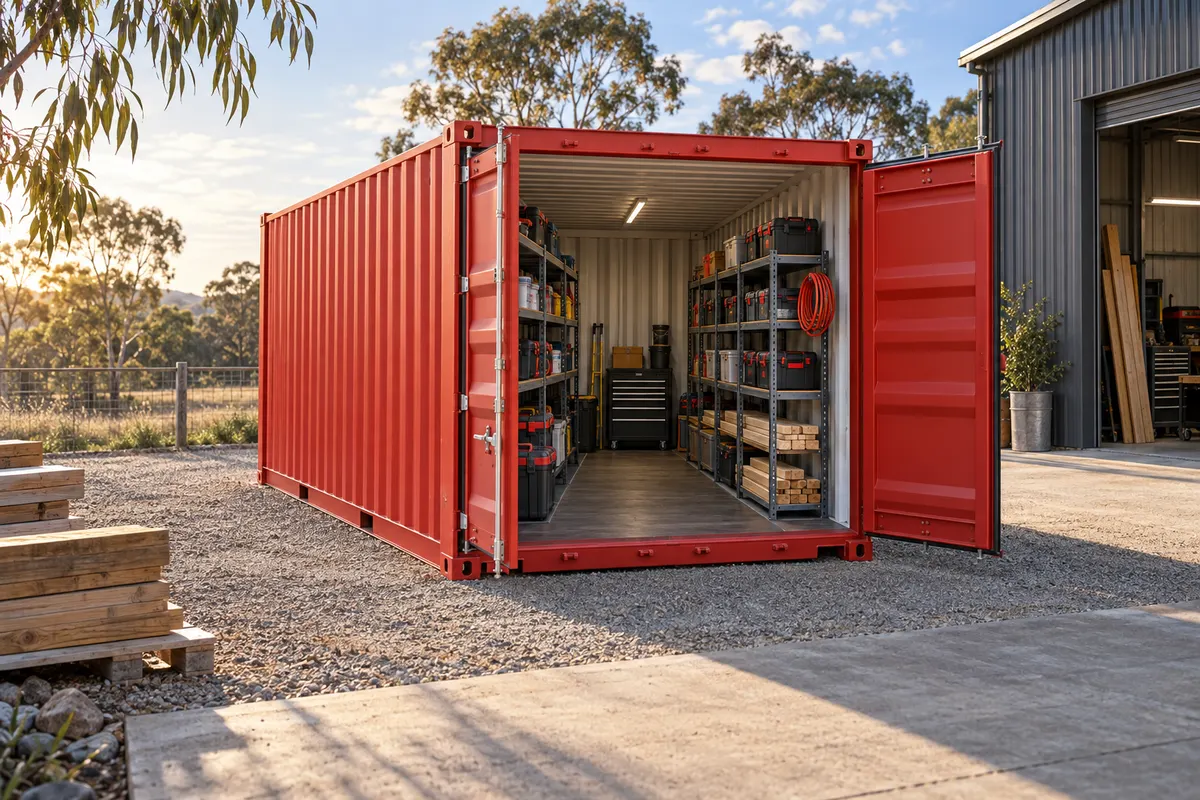
Strip away the marketing names and the Australian market sells three things.
New, or single-trip. Built overseas, loaded once on the voyage out. Sealed steel, unmarked marine-ply floor, door seals that seat properly, usually a choice of colour.
Used, cargo-worthy. Still certified fit to carry freight at sea. Structurally sound, doors operating, floor intact, and checked wind and watertight before it goes on a truck. It will look used — surface rust, patch repairs, dents, somebody else's shipping line on the doors.
As-is. Sold with its faults, priced accordingly. Cheaper again than cargo-worthy, and not sold watertight. That is not a disclaimer, it is the definition of the grade.
Most people shopping on price are choosing between cargo-worthy and as-is, often without knowing that is the choice they are making. The difference is usually a few hundred dollars. The difference in what you own is whether water gets in.
An as-is unit might have a patched repair that weeps in driving rain, a soft or holed section of floor, a door seal that has gone hard and no longer seats, or perforation somewhere in a panel. Any one of those admits water. And here is the part that catches people out: a shipping container is very good at holding water once it is in, because there is nowhere for it to drain. A leaking shed drips and dries. A leaking container becomes a shallow tank with your belongings standing in it.
We sell as-is units and there are good reasons to buy one. Every one of those reasons involves not caring whether the inside stays dry.
The price with no delivery attached. This is the big one, and it is why we treat delivery as its own subject rather than a footnote. An ex-depot price is a real price for a container standing at a depot. It is not a price for a container standing at your place. Anyone advertising a container price without being clear about the freight is relying on you not asking, and the difference on a country address can be more than the container.
"Wind and watertight" applied to everything. That phrase belongs to cargo-worthy grade and better. If a seller uses it about their whole yard including the cheap units, either they have not thought about it or they are hoping you have not.
The photo you never see. Cosmetic condition varies enormously between cargo-worthy units that are all structurally fine. Ask for photos of the actual unit — we send them on request, before delivery — so the truck arriving is not the first time you see what you bought.
The size that does not fit the access. A 40ft is better value per cubic metre than a 20ft and it is worth nothing at all if the truck cannot place it. Sort out the access before the size.
For most people, most of the time: a used cargo-worthy 20ft. Every depot holds them in volume, a standard tilt-tray delivers one without any drama, and it is the size everyone else quotes so it is the easiest to compare. Step up to new if looks matter, if you are fitting it out, or if you expect to resell it. Step down to as-is only if you have read the list above and your job is on it.
Our team can quote the container and delivery together. Share the size, condition and suburb, and compare the complete written quote before booking.
Each quote confirms the container, delivery and GST for your job. Availability, condition and site access are checked before booking.
What the grade names actually mean, what each one guarantees, and how to read a listing that does not say which grade it is selling.
Why nobody can honestly publish a flat national delivery price, the six things that actually move the number, and how to get a delivered figure for your own address.
A practical checklist for a used unit — roof, floor, seals, castings and the door test — plus what to ask for when you cannot inspect it yourself.
Tell us what you need and where it is going for a container and delivery quote.
Prefer a chat? Give our team a call.
Call 1300 639 282