New vs used shipping containers — choosing the right grade
Compare new and used shipping container condition, appearance and suitable uses before requesting a delivered quote.
Cosmetic condition varies enormously between used units that are all perfectly sound, and structural problems hide in a small number of predictable places. Here is what to look at, in the order worth looking at it.
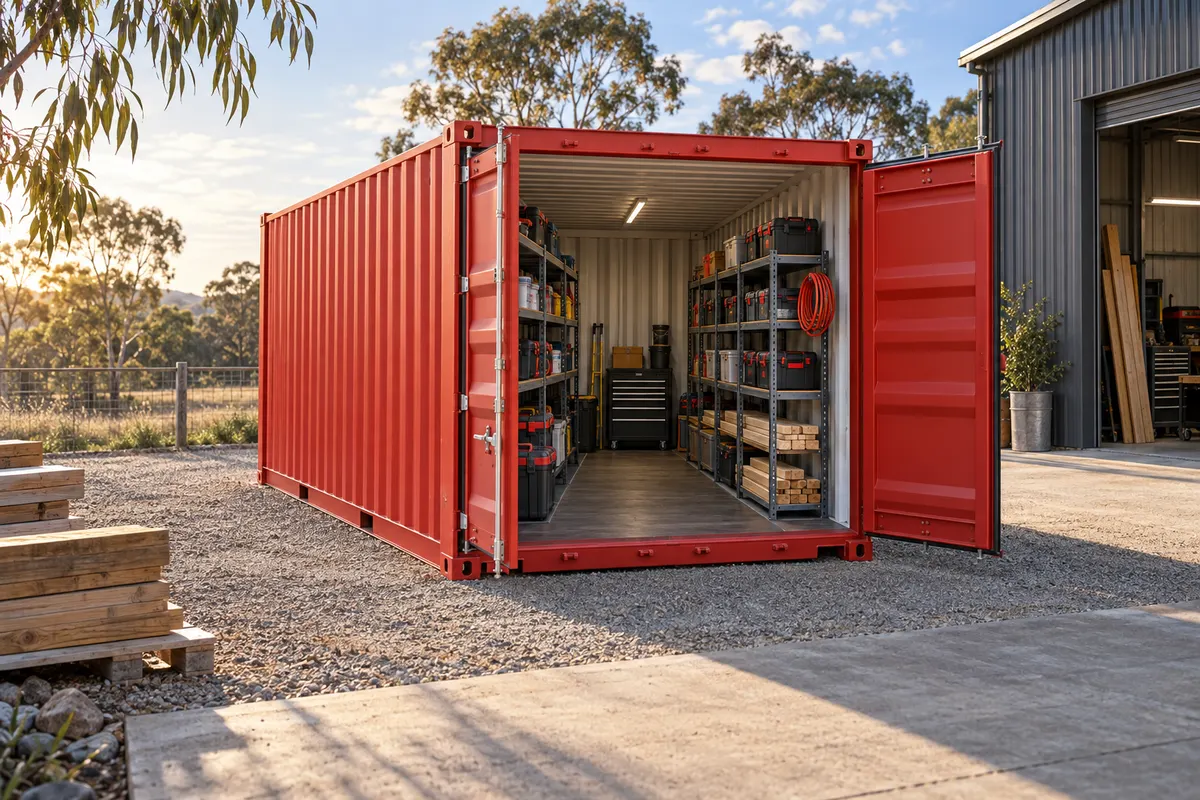
The doors are where a used container fails first and where a bad one gives itself away fastest. Open both, fully, and close them again. They should swing without fighting the frame, the locking bars should turn without a bar and the cams should seat.
Then look at the rubber. Door seals harden and flatten with age, and a seal that no longer presses against the frame is the most common water path into a used container. Press it with a thumb — it should have some give.
A container that will not close properly is not a bargain at any price. Everything you keep inside depends on that one moving part.
This is the whole test, and it takes thirty seconds. Stand inside with the doors closed and let your eyes adjust. Any daylight is a hole. Look along the roof line, up at the roof panels, along both side walls at the top, and around the door frame.
Pinholes in the roof are the classic finding, usually where something has stood on the panel or where water has pooled and sat. They are also the easiest to miss from outside and the most annoying to live with.
Marine ply, usually 28mm. Walk the whole length and pay attention to how it feels rather than how it looks. Soft spots, spongy movement or a repair patch that flexes all point to water that has been getting in for a while.
Staining is not automatically a problem — these boxes have carried everything. Movement is.
The eight corner castings are how the container is lifted, moved and stacked. They should be intact and not distorted. Look along the length of the unit from one end: the top and bottom rails should be straight. A container that has been racked out of square will fight you every time the doors are shut, and it cannot be economically fixed.
Surface rust on a used container is normal and largely cosmetic. What matters is whether it has gone through. Tap suspect areas — a solid tap is fine, a dull one is not. Pay attention to the bottom rail and the underside of the door sill, which is where water sits longest.
Patch repairs are also normal. A properly welded patch is a repair. A patch that has been sealed rather than welded is a future leak.
Most people buying a container never see it before it arrives, and that is a perfectly reasonable way to buy one provided you ask for the right things.
A seller who will not put the actual unit in front of you before it goes on a truck is telling you something about the unit.
Inspect where it is going as well as what is coming. Level, firm ground at all four corner castings, blocked up on something that spreads the load, and enough room for the truck to line up. More containers cause grief through where they were put than through what was wrong with them.
Our team can quote the container and delivery together. Share the size, condition and suburb, and compare the complete written quote before booking.
Each quote confirms the container, delivery and GST for your job. Availability, condition and site access are checked before booking.
Compare new and used shipping container condition, appearance and suitable uses before requesting a delivered quote.
Compare usable space, site access and delivered quotes when choosing a container size. A larger volume is useful only if it fits your job.
Practical advice on what a container hire rate actually includes. Compare suitability, condition and the full delivered quote for your job.
Tell us what you need and where it is going for a container and delivery quote.
Prefer a chat? Give our team a call.
Call 1300 639 282