Comparing shipping container value per cubic metre
Compare usable space, site access and delivered quotes when choosing a container size. A larger volume is useful only if it fits your job.
Start with what you need to store, how the container will be used and how important its appearance is. Those details help you decide whether new or used is the better fit.
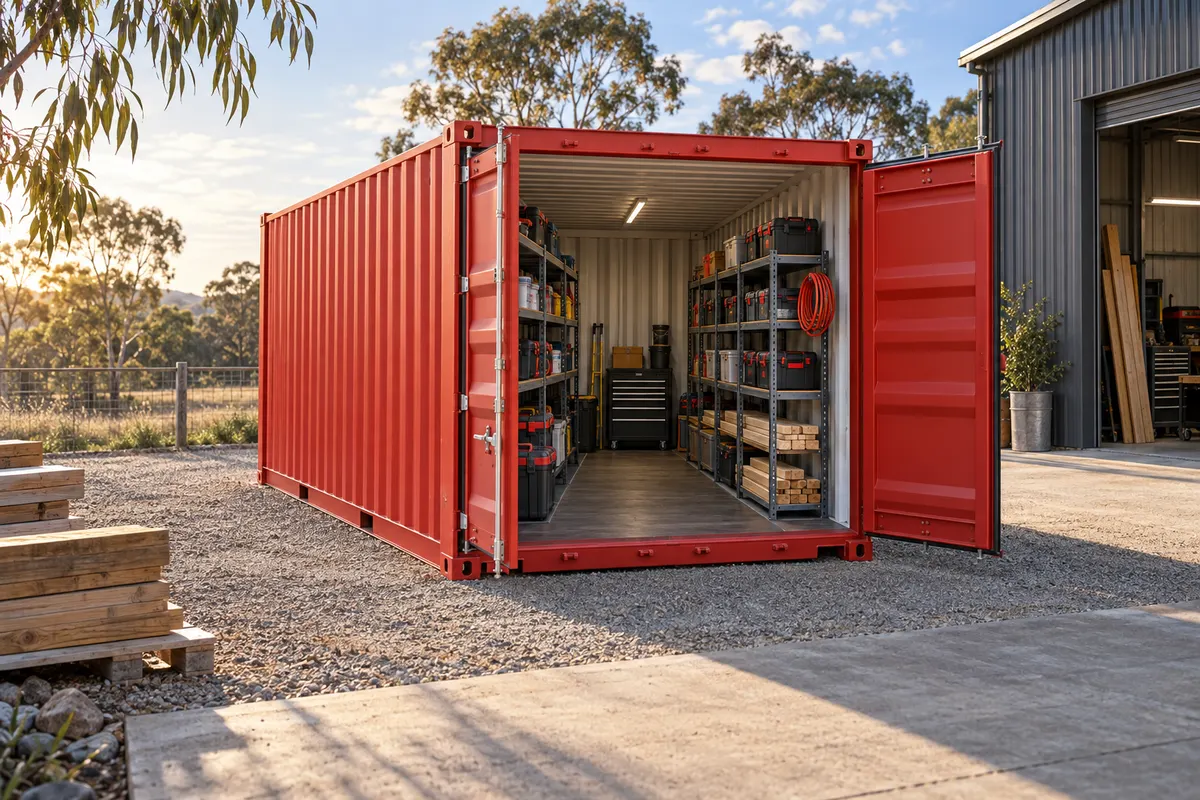
Sealed, unpatched steel. A used cargo-worthy unit is checked wind and watertight before it leaves the depot, so both grades keep rain out on day one. The difference is the starting point for the next fifteen years — a new unit has no existing repairs to eventually fail.
An unmarked floor. Used floors have carried things. They are structurally fine and they are stained.
Door seals that have never hardened. Seals are the first thing to age, and they are the most common water path into an older unit.
Colour. New units usually come in a choice. Used units come in whatever colour they were.
Resale. A newer unit holds a higher share of its value, which matters if the need has an end date.
1. It will be visible. A container in front of a house, a shopfront, a school or anywhere a neighbour looks at it. Appearance is a real requirement and there is no shame in buying for it.
2. You are fitting it out. Lining, insulating, cutting in a door or window, running power. Starting from square, unpatched steel with a clean floor saves hours and avoids discovering a repair behind your new lining. If you are lining it, take the high cube as well — you lose 50 to 75mm of headroom to the lining.
3. Sensitive contents. Documents, electronics, upholstery, anything where a slow problem is expensive. Both grades are sold sound; new gives you more margin over time.
4. You expect to resell. A three-year need on a build or a lease often works out better bought new and sold on than bought used, particularly on a long freight run where you are paying for the truck either way.
That is most jobs.
Before new against used, answer size against access.
Measure the straight run available at the placement spot, look up for wires and branches, and think about the ground after rain. Then pick the size. Then pick the grade.
Every figure is on the prices page with the date it was set, and the grades have their own pages: new single-trip and used cargo-worthy.
Each quote confirms the container, delivery and GST for your job. Availability, condition and site access are checked before booking.
Compare usable space, site access and delivered quotes when choosing a container size. A larger volume is useful only if it fits your job.
Practical advice on what a container hire rate actually includes. Compare suitability, condition and the full delivered quote for your job.
Practical advice on what a shipping container costs after you have bought it. Compare suitability, condition and the full delivered quote for your job.
Tell us what you need and where it is going for a container and delivery quote.
Prefer a chat? Give our team a call.
Call 1300 639 282